
Electrifying the problem – part 2
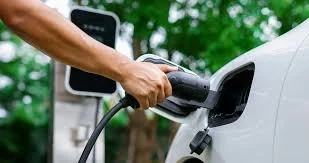
With the price of fuel out the gate, is it electrics time in the sun. We take a look under the hood.
The first thing to consider is, is this a temporary increase or a reset, it’s anyone’s game until something gives and right now it’s too early to determine the outcome. If it’s temporary and we believe it will be, then fuel prices are likely to ease again, but it could take a while.
The other thing is, come 2027 the NZ Govt proposes RUC on ALL vehicles in lieu of fuel excise with an e-road type system being rolled out which will change the pricing model up again. Click here to take you to a NZTA website article.
Let’s compare fuels per 100 kms given they’ve increased again on last week.
Electric vehicle charging off peak translates to around $3.00 / 100 kms plus RUC @ $7.60 so total $10.60 / 100 kms.
ICE vehicles on 91 using 10l / 100 kms is $34 / 100 kms.
Hybrid vehicles at say 6.5l / 100 kms on 91 is $22 / 100 kms. The big advantage of hybrid is you’re running around on self-generated ( free ) electricity while driving around town where your fuel consumptions if typically highest, giving you the best of both worlds.
ICE vehicle on 95 / 98 are typically more economical so factoring 8l / 100 kms at the higher price of $3.77 litre for 98 puts it at $30.16 / 100 kms
Diesels usually come in around 9 litres / 100 kms so $31 / 100 kms plus RUC taking it to $38.60 / 100 kms.
So you can see electric is way cheaper to run also with lower servicing costs given there’s no engine with moving parts to maintain, but that’s not the whole story. There’s the cost of setting up charging equipment at home so you can trickle charge at lower off peak rates and of course living with electric has its own set of pro’s and con’s with range anxiety, away from home charging, combustion risk, battery degradation, initial purchase cost and depreciation to consider.
Given the private light vehicle sector average travel is around 15’ kms pa or 1,250 kms mth, with an electric vehicle coming in at $132 mth and an ICE vehicle $425 mth, there’s a $292 mth difference right now. Hybrid on 91 at $275 mth is $142 mth difference on the average kms but what if 91 goes back to $2.49 litre, then the difference is $166 mth for ICE and just $62 mth for hybrid.
So in reality, for the average commuter there’s not a lot in it in actual usage, you’d buy electric because you want the long term benefits but the cost to change can be way greater than the difference in running costs when you break it down. Electric as it improves, will have an increasing presence in the NZ fleet.
In the last month we’ve seen a surge in EV sales which says we’ve reached a tolerance on price point and now EV’s are a viable option can choose to not be exposed to the vagaries of fuel supply which is a good thing. Just a few years ago that was not an option and as EV systems develop in NZ they will be more and more a part of our lives.
NZ ranks as one of the highest in the world in vehicles per capita ranking 6th only behind 4 micro-states and Taiwan and ahead of everyone else but lag in EV uptake with just one in ten new vehicle sales electric compared to globally one in four. Australia has one in five and China one in two new vehicles sold being electric. Click here for that list.
With Govt incentives in place to expand public charging facilities to 10,000 outlets by 2030 and one of the world’s most sustainable electricity grids, if all vehicles in NZ we’re electric it would only increase the demand for electricity by 20% which is easily sustainable according to Drive Electric.
Click here to take you to the EV Infrastructure news website.
It appears the current situation could be the impetus for a drive to electric or at least have one EV in the driveway as a runabout with hybrids offering superior fuel efficiencies while diesel utes in particular are still a favourite due to their functionality and versatility.
So electric is here to stay and will infiltrate our lives more and more much in the way motor vehicles took over from horses and its probably not a bad thing.